Peace Fingers: A Designer's Review for Small Business Merch
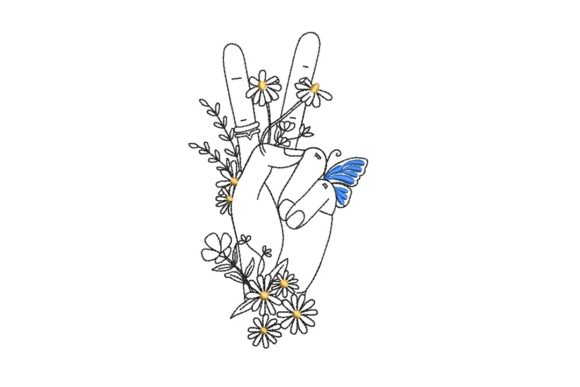
As an experienced embroidery designer who has spent years refining designs for everything from high-end boutique labels to rugged workwear, I know that selecting the right machine embroidery design is about more than just aesthetics. It is a strategic decision that impacts your production costs, brand perception, and customer satisfaction. When I first encountered the Peace Fingers design, described as a peaceful floral embroidery that inspires freshness, calmness, and beauty, I immediately began evaluating its potential for real-world commercial applications.
This review focuses on how this specific embroidery file performs when translated into tangible assets like branded patches, staff uniforms, and custom apparel. Whether you are an Etsy seller looking to elevate your product line or a small business owner needing a cohesive visual identity, understanding the nuances of Peace Fingers is crucial before you commit to mass production.
The First Impression: Personality and Brand Fit
The title "Peace Fingers" combined with the description of "freshness, calmness, and beauty" suggests a design that leans heavily into the Inspirational category. Visually, I expect this piece to balance organic floral elements with a friendly, approachable vibe. For small businesses in sectors like bakeries, florists, pet brands, or creative studios, this aesthetic is gold. It avoids the sterility of corporate logos while maintaining enough structure to look professional.
Unlike bold, aggressive graphics that scream for attention, Peace Fingers whispers quality. It feels handmade yet polished, making it ideal for brands that want to convey trust and warmth. However, this personality comes with constraints. If your brand identity is built on industrial grit or high-tech minimalism, this floral motif might feel out of place. But for those selling handmade products, offering artisanal services, or creating cozy merchandise, the design offers a perfect visual anchor.
Real-World Application: From Patches to Product Labels
The true test of any digital embroidery file is how it holds up on various surfaces. Let's imagine a scenario where a local café or boutique wants to launch a line of branded merchandise. How does Peace Fingers perform in these specific use cases?
- Embroidered Patches: This design shines as a standalone patch. The floral nature allows for intricate detailing that looks premium when sewn onto denim jackets, tote bags, or backpacks. It serves as a great conversation starter for customers browsing your shop.
- Apron Embroidery: For bakeries or craft studios, placing this design on the chest of a white apron creates an instant sense of care and artistry. It signals to the customer that the person preparing their food or crafting their goods takes pride in their work.
- Cap Embroidery: The design's compact nature makes it suitable for the front panel of baseball caps or beanies. It works well as a subtle logo accent rather than a massive statement piece.
- Tote Bag Design: A canvas tote featuring Peace Fingers becomes a walking billboard. Because the design implies a relaxed, positive lifestyle, it appeals to the target demographic of eco-conscious shoppers and creatives.
- Staff Uniforms: For a team of baristas or retail associates, this design adds a touch of uniformity without feeling rigid. It fosters a sense of community and shared values among employees.
In every instance, the goal is to create a finished product that feels cohesive. When Peace Fingers is executed correctly, it elevates the perceived value of the item, turning a simple $5 tote bag into a desirable accessory worth $20.
Strategic Considerations and Potential Pitfalls
While the potential is high, an experienced designer knows where to tread carefully. There are specific scenarios where Peace Fingers might struggle if not managed properly.
Small Patch Sizes: Floral details often rely on fine lines and negative space. If you attempt to digitize this for a tiny 2-inch patch, the detail may become muddy or lost entirely. Always ensure the design is scaled appropriately to maintain clarity.
Curved Surfaces and Cap Fronts: Embroidering on curved surfaces requires precise tension control. High stitch density can cause puckering on tight curves, which is common on cap fronts. You must verify the hoop size and adjust the digitization to accommodate the curvature of the hat.
Fabric Texture and Color: Dark uniforms present a challenge. Without proper underlay and thread selection, light-colored floral elements might get lost against dark fabric. Similarly, textured fabrics like heavy wool or slubby cotton can distort the design, making it look uneven. In these cases, a stabilizer choice becomes critical to support the stitches.
Frequent Washing: For items like work shirts or aprons that undergo frequent laundering, the durability of the design is paramount. If the stitch density is too low, the design may fade or snag. If it is too high, the fabric may pucker and tear over time. Balancing these factors is key to longevity.
Impact on Brand Identity and Customer Trust
Your embroidered merchandise is often the first physical touchpoint a customer has with your brand. A poorly executed design can undermine months of marketing effort. Conversely, a well-executed Peace Fingers design reinforces your brand promise.
When customers see a crisp, clean floral design on a high-quality garment, they subconsciously associate that precision with your business operations. It builds brand identity by signaling that you pay attention to details. This visual consistency across different assets—whether it is a product label, a gift tag, or a staff shirt—creates a professional image that commands respect and encourages repeat purchases.
Furthermore, in the competitive world of handmade products and Etsy shops, unique design assets are your differentiator. Using a distinct, well-crafted design like Peace Fingers helps your brand stand out in a sea of generic templates. It tells the buyer that this is a thoughtful, curated experience, not just a commodity.
Practical Notes for Production Success
Before you run this commercial embroidery project, there are several technical steps you must take to ensure success. As a designer, I cannot stress enough the importance of testing.
- Test in Black and White: Convert the design to grayscale to check contrast. Ensure the floral elements have enough definition even without color to guide your thread choices.
- Check Small Scale: View the design at actual patch size on your screen. Does the detail remain clear? If not, simplify the digitization.
- Review Thread Colors: Select thread colors that complement the intended fabric. High contrast is usually safer for visibility, but tonal threads can add a sophisticated, subtle look.
- Inspect Spacing: Ensure there is adequate spacing between elements to prevent stitching errors and fabric distortion.
- Confirm Hoop Size: Match the design dimensions to your available hoop sizes to avoid cutting off parts of the pattern during production.
- Test on Real Fabric: Never guess. Stitch the design on the actual material you intend to use. Observe how the fabric reacts to the needle and tension.
- Use Proper Stabilizer: Choose a stabilizer (cut-away, tear-away, or sticky) that matches the weight and stretch of your fabric to prevent shifting.
- Create a Mockup: Use a printable mockup to show clients what the final product will look like before you cut any fabric. This manages expectations and secures approval.
- Verify Licensing: Most importantly, confirm the commercial licensing terms of the digital file. Ensure you have the legal right to sell products bearing this design.
By following these guidelines, you transform a simple embroidery design into a powerful business tool. Peace Fingers offers a beautiful opportunity to infuse your brand with a sense of calm and creativity. With careful planning and execution, it can become a signature element of your small business merchandising strategy.